2011 Portfolio
Individuals were the heroes of the region’s cultural sector during the recession. In an analysis of the region’s cultural activity from FY 2007 to FY 2009, the Cultural Alliance documented a 20% increase in individual giving and a 5% increase in attendance at area cultural nonprofits. Overall, individuals pumped $406 million into the struggling cultural nonprofits sector in FY 2009, an increase of $48 million over FY07.
These findings come from the 2011 Portfolio, the most recent report by the Cultural Alliance. The 2011 Portfolio provides information on the health, breadth, and diversity of the region’s cultural sector, including the first comprehensive look at the effects of the recession on Southeastern Pennsylvania’s nonprofit arts and cultural organizations.
Individuals’ investments in the sector helped mitigate the damage done by the recession including the large drops in the values of investment portfolios, belt-tightening on the part of corporate and foundation donors and cuts to government funding.
Click here to view the full report online at Issuu.com.
2011 Portfolio Key Findings
The show must go on…
.jpg) The arts remained affordable in the recession. Pricing was stable at a median admissions price of $15.
The arts remained affordable in the recession. Pricing was stable at a median admissions price of $15.
Activity was up. During the recession, attendance increased 5%, while the number of events remained stable.
Expenses remained essentially flat, but revenues dropped. Revenues fell 12% (excluding investments). Including investments, revenues fell 43%.
.jpg) Almost half of Portfolio organizations are in the red. Operating margins (excluding investments), which had been thin in FY2007 (+2%), became negative in FY2009 (-9%).
Almost half of Portfolio organizations are in the red. Operating margins (excluding investments), which had been thin in FY2007 (+2%), became negative in FY2009 (-9%).
In making hard workforce decisions, organizations made deeper cuts to administrators than to artistic and programmatic staff.
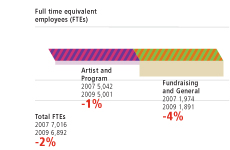 Employment changes left cultural workers and organizations vulnerable. There was a 16% growth in the number of independent contractor positions and a 2% drop in full-time equivalents (FTEs). Currently, only 4 in 10 (39%) cultural positions offer full-time employment.
Organizations deferred maintenance to keep the doors open. Expenditures on facilities-related categories, including major repairs, declined by 44%.
Organizations had less margin for error. Working capital fell 24% and liquid assets declined 12%.
…because people value arts and culture
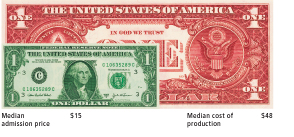 The arts are more accessible than ever. Admission prices to cultural organizations are significantly less than the actual cost to organizations of producing events and performances. For organizations that charge admission, the median cost of production ($48) is three times higher than the median ticket price ($15).
.jpg) There are almost 17 million visits to cultural organizations each year. This is equivalent to more than four visits for every resident of Southeastern Pennsylvania. More than half of all visits (52%) are free.
There are almost 17 million visits to cultural organizations each year. This is equivalent to more than four visits for every resident of Southeastern Pennsylvania. More than half of all visits (52%) are free.
Culture extends the classroom. There were 34,000 visits by school groups to cultural organizations.
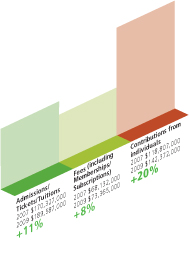 Individuals saved the day. Individuals proved to be the greatest source of support for cultural organizations during the recession. Admissions, tickets, and tuition revenue rose 11%, and memberships/subscription fees grew 8%. Individual donations rose 20%, while all other sources of contributed income declined.
Volunteers are the unsung heroes of the industry. The total number of volunteer and board positions (32,000) outnumbers total employment positions (24,000), with volunteers accounting for 30% of the total work hours for the field.
Downloads
Related Research
-
Cultural Dynamics
Cultural Dynamics A report on the future of arts & culture in Philadelphia Launched in November 2024 by the Greater…
-
A Look at Theater-Going Habits in Greater Philadelphia
A Look at Theater-Going Habits in Greater Philadelphia The Greater Philadelphia Cultural Alliance is pleased to share the results of…
-
Theater Audience Research Project
Theater Audience Research Project Our recent PA CultureCheck 2023, done in partnership with PA Humanities, shows that only 15%…
-
PA CultureCheck 2025
PA CultureCheck 2025 PA CultureCheck 2025 is a statewide report that shines a light on the pandemic recovery progress…
-
Social Impact Database
Social Impact Database The Social Impact Database is a research project by the Greater Philadelphia Cultural Alliance, made possible by…
-
Arts, Culture & Economic Prosperity
Arts, Culture & Economic Prosperity Arts, Culture & Economic Prosperity: Greater Philadelphia is an economic and social impact study of…